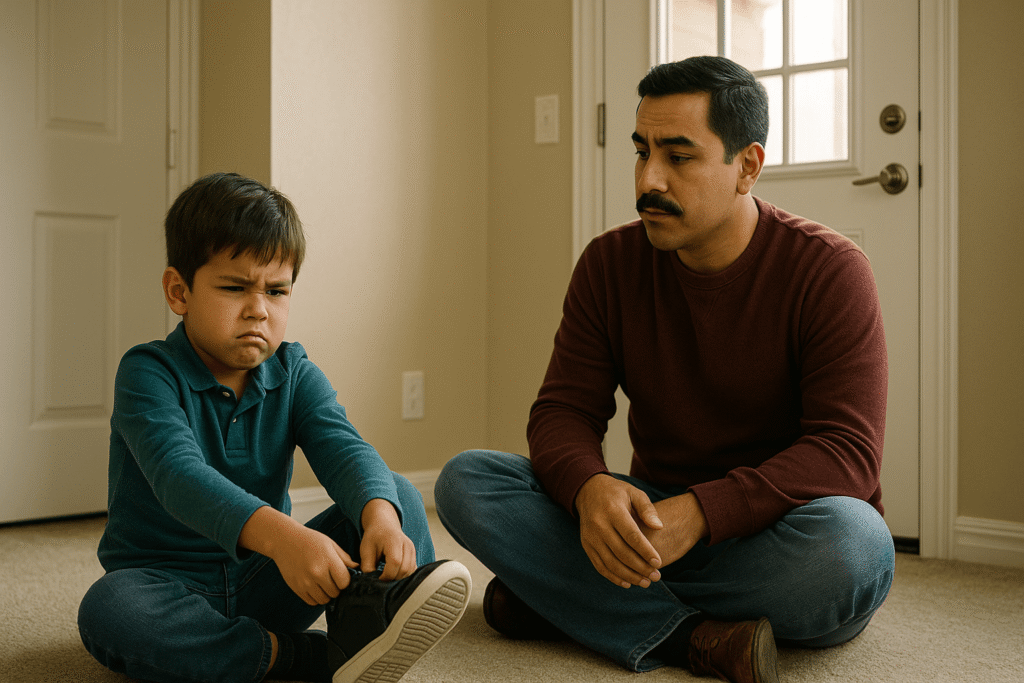

There’s a moment in parenting that can be just as heartbreaking as the loudest meltdown.
It’s when your child… just stops trying. They might say:
“I can’t do it.”
“It doesn’t matter.”
Or maybe they don’t say anything at all – they just sit, shoulders slumped, eyes down.
It’s tempting to rush in and fix it – to do it for them, or to shower them with praise. But in that moment, what they need most is something deeper: your quiet faith in their ability to keep going.
The Hidden Message
When a child shuts down or gives up, it’s not because they’re lazy or don’t care. It’s because they’ve formed a mistaken belief:
“I’m not good enough. I can’t belong or matter because I’m not perfect. So why even try?”
This feeling of hopelessness can make them withdraw – and as a parent, it can make you feel completely lost.
What You Might Feel
- Sadness
- Helplessness
- Guilt – like you’ve failed them somehow
You might find yourself wanting to do everything for them. Or you might want to push them to try – even when they’re not ready.
What’s Really Going On
Children have a deep need to feel they belong and that they matter. When they feel inadequate, they believe they can’t meet those needs – so they stop trying.
But here’s the good news: when you show them that small steps are okay, and that they’re loved no matter what, you help them start again.
So… What Can We Do Instead?
Here are some gentle, practical ways to respond – and real examples for those hard moments.
1) Break tasks into tiny steps
A big task can feel impossible. Small steps build courage.
Example: Instead of saying, “Clean your whole room,” start with:
“Can you pick up just three toys first?”
This shows them that progress is possible – even when it’s small.
2) Avoid rescuing or over-helping
It’s tempting to do it for them when they struggle. But that teaches them: “You can’t do it – so I have to.” Instead, stay close, offer encouragement, and let them try.
Try saying:
“I’m right here. I’ll help if you get stuck. Show me what you can do first.”
3) Celebrate small successes
When they take even a tiny step, notice it.
“I saw how you kept trying even when it was tricky. That took courage.”
This helps them see their efforts – not just the result.
4) Focus on encouragement, not fixing
Instead of fixing it for them, offer words that build their inner belief:
“You don’t have to do it perfectly. I believe in you.”
“It’s okay to go slow. You’re learning.”
5) Show them they’re not alone
Let them know you’re there – not to rescue, but to stand beside them.
Try saying:
“I know this feels hard. I’m here, and I love you even when it’s hard.”
6) Use family meetings to practice small steps
Family or class meetings are a safe space to plan tiny goals together. They build confidence because your child sees that even little efforts are valued.
At a meeting, ask:
“What’s one small thing you’d like to try this week?”
Then celebrate those efforts – no matter how small.
Final Words
When your child says, “I can’t,” what they’re really saying is:
“I don’t feel good enough to even try.”
You don’t have to push harder or fix everything for them. You just have to show them that small steps count, and that they matter – no matter how slowly they go.