
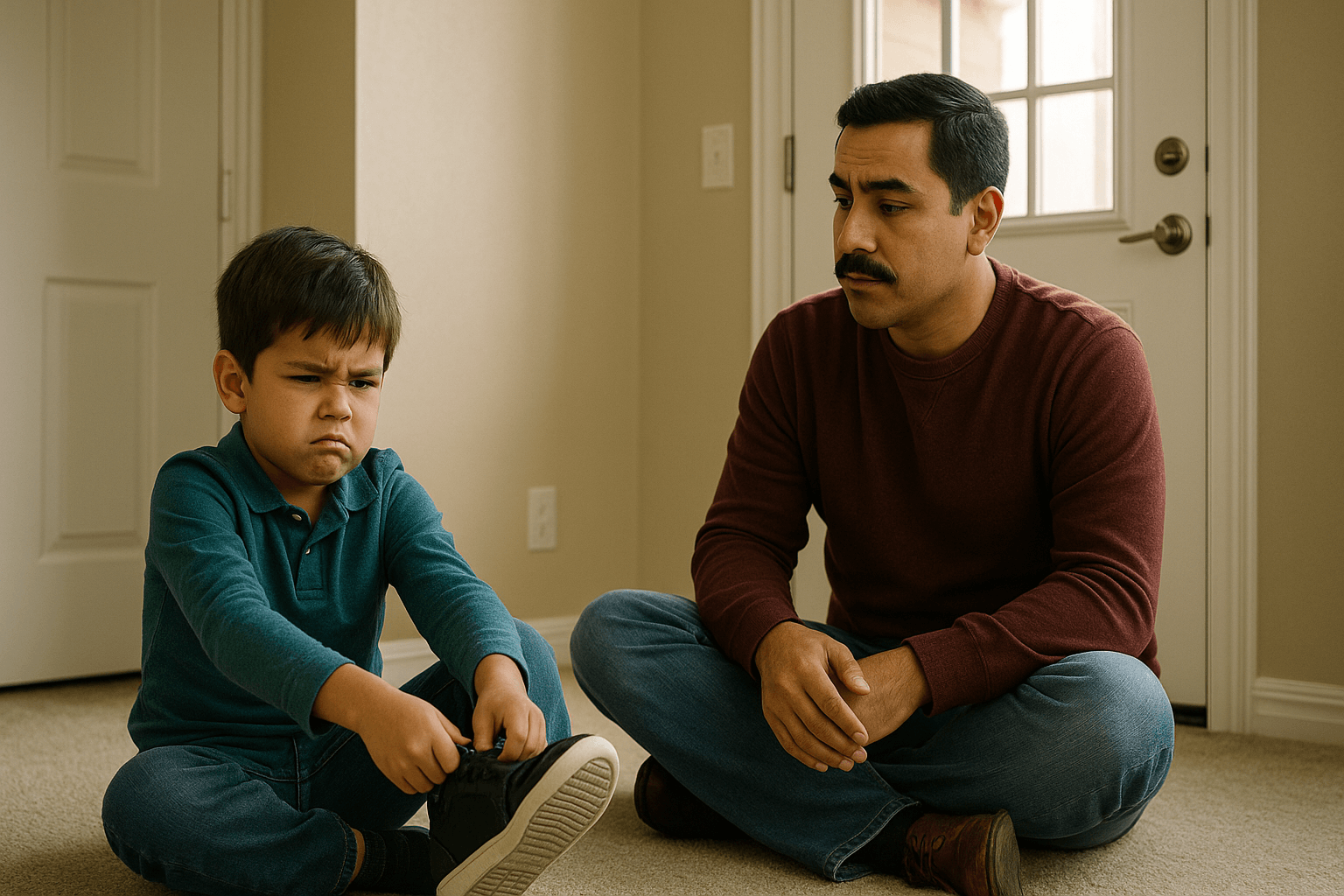
It happens in almost every home at some point. You ask your child to do something simple, and suddenly – it’s a full-on battle. You get the look, the crossed arms, or the dreaded words:
“You’re not the boss of me!”
“You can’t make me!”
If you’re like most parents, you feel your blood pressure rise. Child power struggles are real – and they’re exhausting. But they’re also deeply human. Understanding what’s really happening underneath can help you respond with calm and connection instead of frustration.
Why Power Struggles Feel So Hard
When your child resists you, you might feel:
- Challenged and disrespected
- Angry that they won’t listen
- Defeated, like nothing works
Thoughts like “They can’t get away with this” or “This child is not in charge” are normal. But reacting from that place often leads to threats, yelling, or endless arguments. And unfortunately, those reactions usually make the behavior worse – not better.
What’s Behind Child Power Struggles
Most of the time, resistance isn’t about being “bad.” It’s about an internal need:
- “I need to feel in control of something.”
- “I want to feel capable – and powerful in my own way.”
Children who don’t feel respected or empowered often push back in the only way they know how: saying no, ignoring, refusing, or being defiant. Think about the child who suddenly refuses to put on pajamas – it’s not about the pajamas, it’s about wanting a voice in what happens to them.
What to Try Instead
Here are gentle, effective responses that reduce child power struggles while keeping your role as a calm leader.
1) Let Them Help
Instead of commanding, invite cooperation:
“Can you be in charge of choosing today’s snack?”
“Would you help me fold the towels?”
Giving children responsibility communicates: “You have power here.”
2) Offer Limited, Real Choices
Choices give children control within safe boundaries:
“Do you want to wear the red or the blue shirt?”
“Should we start with reading or drawing?”
3) Step Back Instead of Fighting
When emotions rise, step away calmly:
“I’ll be in the hallway when you’re ready to talk.”
Don’t match their intensity. Model calm power and self-control.
4) Build Visual Routines
Children resist less when they know what to expect. Make charts, draw pictures, or use stickers. Let them help create the routine – a bedtime chart with drawings of pajamas, toothbrush, and story time gives children a sense of control.
5) Stay Kind and Firm
You can be gentle without giving in. For example:
“You don’t have to like the rule. I’m still going to follow through.”
Consistency builds trust – even when children are upset.
6) Invite Problem-Solving
After the moment passes, talk about what to do next time:
“What could we do differently when it’s time to leave the park?”
“How do you want to feel when we get ready for school?”
Children feel respected when their ideas matter – and they learn responsibility through participation.
Final Thoughts
When a child says, “You’re not the boss of me,” they’re not trying to destroy your authority. They’re trying to figure out where their own power begins. Your job isn’t to win every battle, but to lead with confidence, respect, and connection.
So next time you feel a power struggle rising, take a breath. Step back. Respond in a way that reminds your child that they are powerful – and so are you.