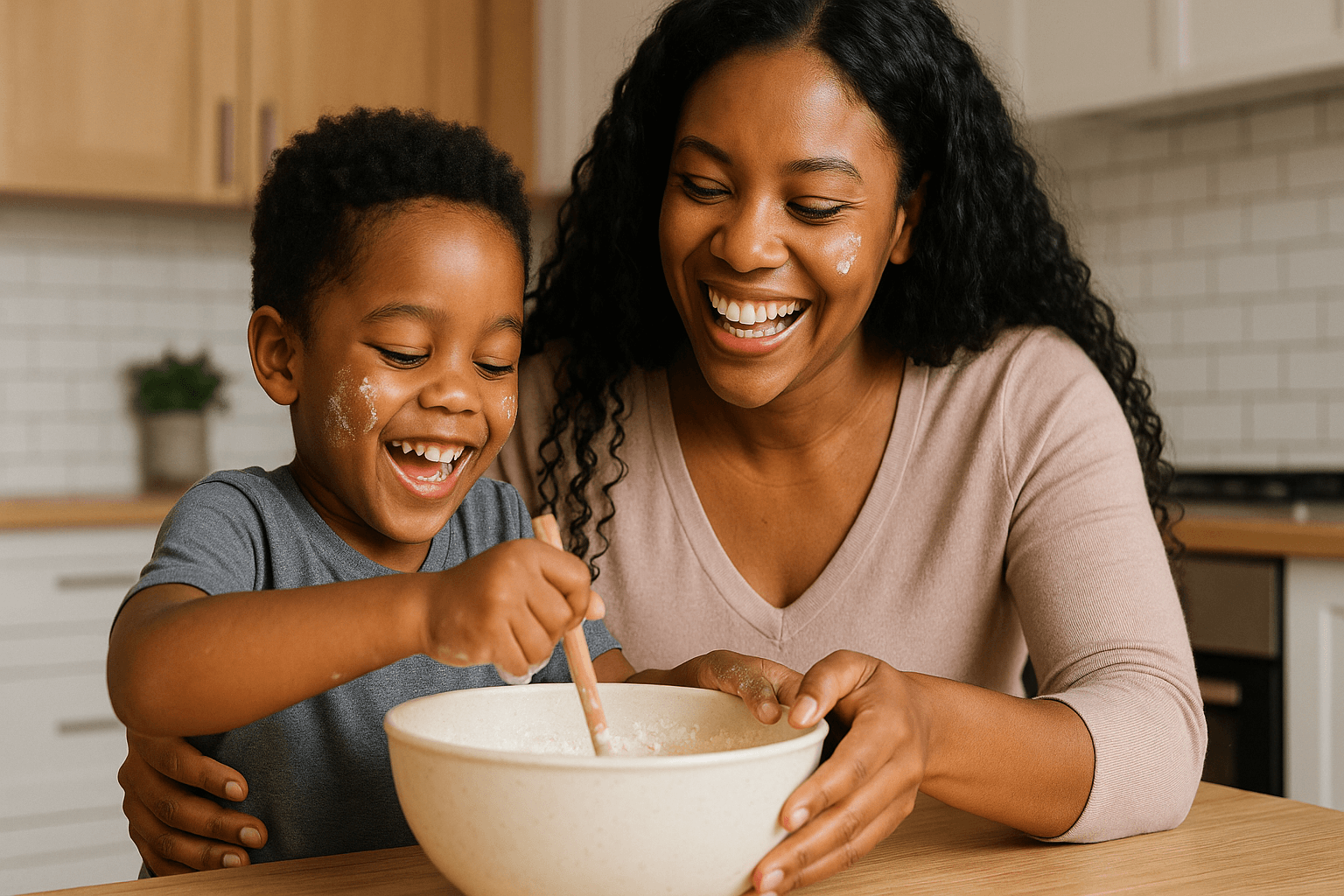
Cooking with children isn’t just a cute bonding moment. It’s a rich developmental experience that builds life skills, strengthens your relationship, and helps shape the way your child sees themselves and the world.
In Montessori education, cooking is part of Practical Life – a foundation for independence, coordination, and real-world competence. In positive parenting, we know that giving children meaningful responsibility builds confidence and connection. Cooking does all of this – and more.
Why Cooking with Children Matters
It builds capability and independence
Children don’t just want to “help” – they want to belong. When you invite your child into the kitchen, you’re saying: “You are capable. I trust you.” This is powerful. Being part of something real – mixing batter, squeezing lemons, setting the table – gives children a deep sense of purpose.
Example: A toddler proudly carrying napkins to the table or a preschooler washing lettuce. These moments tell them: “I make a difference.”
It supports brain development
Cooking naturally involves sequencing, attention, planning, memory, and problem-solving – all essential skills for learning and life. When your child stirs, measures, or cracks an egg, they practice patience, focus, and follow-through, all wrapped in joy.
Example: Measuring flour together teaches not only math but also focus and careful observation.
It nurtures emotional regulation
Things spill. The batter lumps. The crust cracks. That’s life – and learning. Cooking provides low-stakes opportunities for children to deal with frustration, adapt, and try again. Sensory input (kneading, whisking, tasting) helps regulate the nervous system and calm the mind.
Example: A child drops an eggshell into the bowl, and instead of scolding, you calmly show how to scoop it out – teaching resilience and patience.
It builds cooperation and connection
In the kitchen, you’re not just instructing – you’re collaborating. Your child gets a chance to take initiative, listen, take turns, and work as a team. This grows mutual respect and trust – one recipe at a time.
Example: One sibling stirs while another pours. Both feel included and valued.
It grows vocabulary and communication
Cooking introduces meaningful language: verbs like pour, knead, whisk; nouns like zest, strainer, yolk. When language is tied to real action, it sticks. It becomes part of the child’s thinking and identity.
Example: A five-year-old who learns the word “grate” while preparing carrots will never forget it, because it’s rooted in action.
It engages all the senses
From the smell of lemons to the feeling of sticky dough, cooking with children is multisensory and immersive. It builds body awareness, sensory integration, and pure joy.
Example: Letting a child smell vanilla extract or feel the texture of flour before adding it makes the process unforgettable.
Long-Term Benefits of Cooking with Children
- Children who cook regularly become more confident problem-solvers.
- They develop stronger attention spans and a deeper sense of responsibility.
- They are more likely to try new foods and approach meals with curiosity, not fear.
- They feel genuinely useful – and that sense of contribution boosts self-esteem more than praise alone ever could.
Final Thoughts
You’re not just making dinner. You’re building brain pathways, emotional resilience, and life-long memories. Cooking with children is an investment in skills, connection, and confidence that lasts far beyond the kitchen.